What to see in El Puig
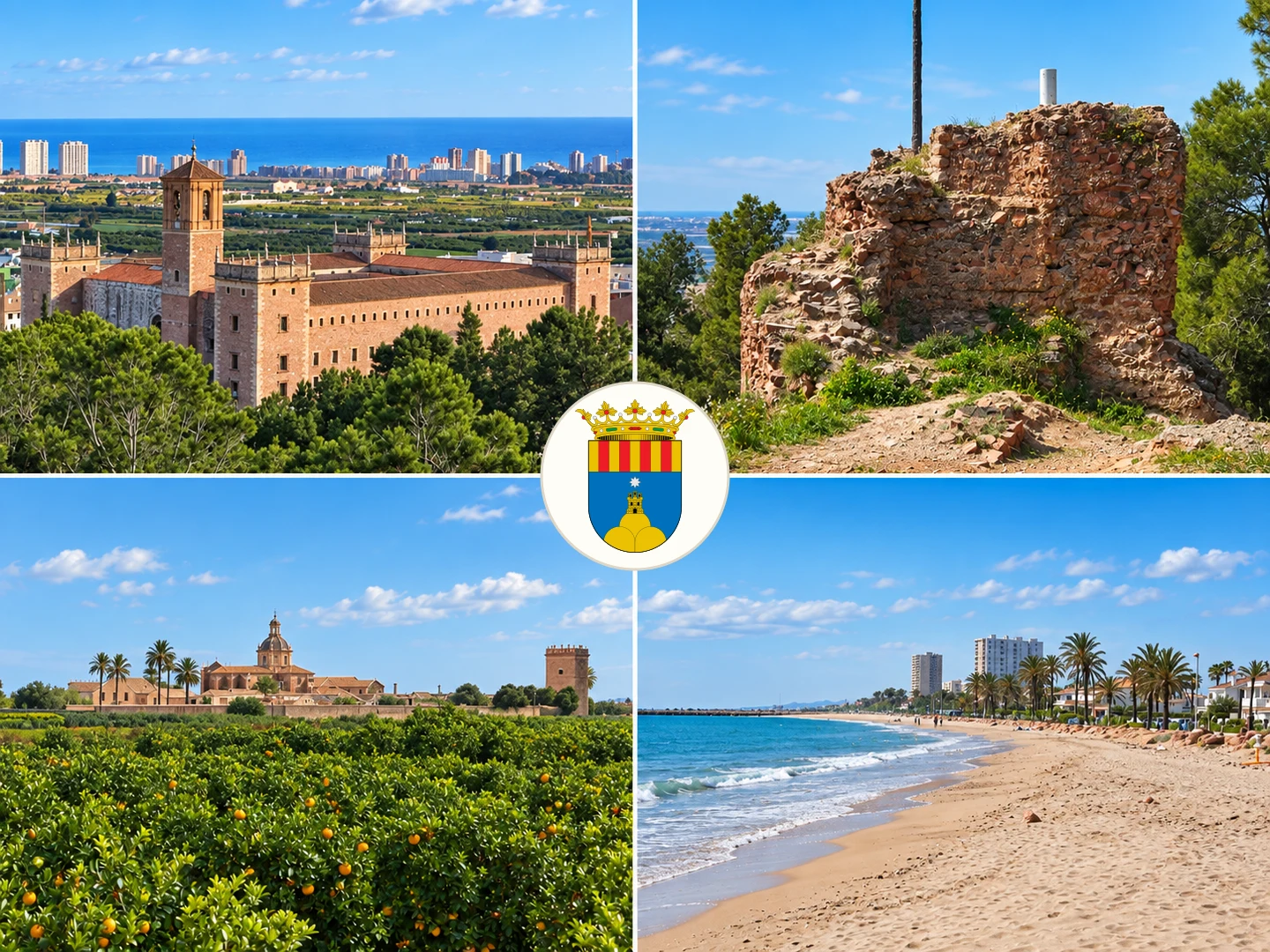

El Puig de Santa María is a small town just 16 km north of València, where one of the decisive episodes of Valencian history unfolded: the Battle of El Puig in 1237, the victory that opened Jaume I's path to the conquest of the capital. The town's medieval past shows in almost every corner, and it makes a solid day trip for anyone who wants to understand where the city comes from.
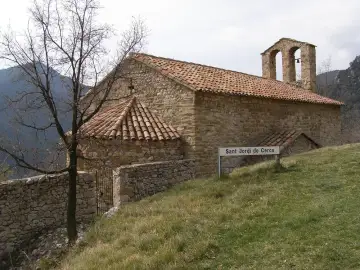
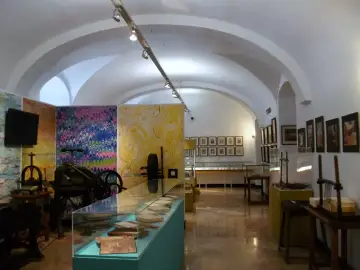
The main draw is the Royal Monastery of Santa María, founded at the king's own behest in 1240 after, as legend has it, an image of the Virgin was found hidden beneath a bell. You can tour its cloisters, the Gothic hall of Jaume I, and the small Museum of Printing and Graphic Art housed within its walls. A climb up Sant Jordi hill leads to the hermitage of Saint George, built in 1631 to commemorate the battle, with views that reach all the way to the sea.
Getting there is straightforward: the Cercanías C6 line from València-Nord reaches El Puig in around 20 minutes for just a couple of euros, and by car it's 15 minutes along the V-21. If you visit in March, the town's celebrations for the Virgin, patron of the old Kingdom of Valencia, are worth catching.
Local tip: pair the visit with nearby Sagunto and its Roman theatre, or head back along the coast toward the northern beaches. For more weekend ideas, see our guide to pretty towns near València.
What to see in El Puig
- Real Monasterio de Santa María del PuigMonument~250 m from the Town Hall
A fortress-monastery built on the orders of Jaume I in the 13th century to guard the revered image of the Mare de Déu del Puig, patron…
- Castillo del Puig (Cerro de Sant Jordi)Castle · FREE~300 m from the Town Hall
On the hill overlooking the town stand the ruins of the castle where Jaume I set up his base for the conquest of València after the 1237…
- Cartuja de Ara ChristiMonument · FREE~1.4 km from the Town Hall
A 16th-century charterhouse listed as a Site of Cultural Interest, with a blue-domed Baroque church, cloisters and cells that still carry…
- Ermita de Sant JordiChurch · FREE~700 m from the Town Hall
A small Baroque hermitage built in 1631 to commemorate the 1237 Battle of El Puig and the legendary intervention of Saint George on behalf…
- Museo de la Imprenta y de las Artes GráficasMuseum · FREE~250 m from the Town Hall
Set up in several rooms of the Royal Monastery of Santa María, it was the first printing museum in Spain and, according to its operators,…
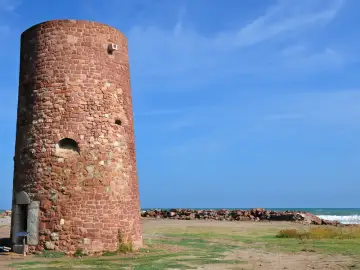
- Torre de GuaitaMonument · FREE~2.9 km from the Town Hall
This truncated-cone watchtower stands right on the seafront of El Puig beach, beside the promenade, built in the second half of the 16th…
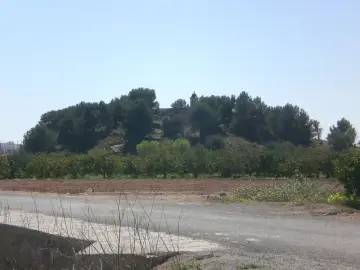
- Muntanyeta del CabeçolViewpoint · FREE~1.1 km from the Town Hall
A small hillock northeast of El Puig towards Puçol, still within El Puig's municipal boundary, very easy to reach and offering wide…
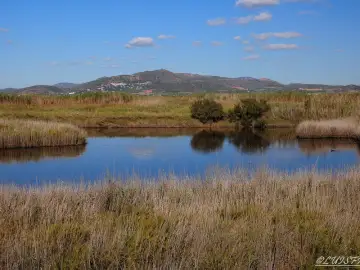
- Marjal de El PuigBeach & nature · FREE~100 m from the Town Hall
A former coastal wetland between the town centre and the beach, halfway between Valencia and Sagunt, today largely turned over to market…
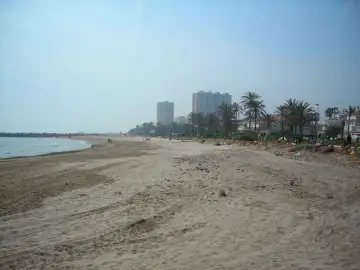
- Playa del PuigBeach & nature · FREE~100 m from the Town Hall
A quiet, uncrowded beach north of València, reachable by commuter train.
🎟️ Upcoming events in El Puig

Compare all towns by transport →
Frequently asked questions
How do you get to El Puig from València?
The simplest option is the Cercanías Renfe train, line C-6 (towards Castelló), which stops at El Puig de Santa María. MetroBus line 112 also serves it, and by car you reach it via the V-21 (exit 5) or the A-7.
How long does it take from València to El Puig?
About 30 minutes by Cercanías train, or roughly 20-25 minutes by car on the motorway, since it's only about 15 km away.
What is there to see in El Puig?
The visit centres on the Royal Monastery of Santa María del Puig and its museum. It's worth climbing up to the Castillo del Puig (Sant Jordi hill) for the views, and rounding it off with the Ara Christi Charterhouse, the Printing Museum, and the Civil War shelters and trenches.
Is El Puig worth it for a day out with kids?
Yes. It's a short, cheap trip from València, with a monastery, a castle, wetlands, and a beach nearby. The Cercanías line makes it easy to go without a car and get back the same day.
🔒 Secret spots
- Hidden gemWater among rocks: a corner of inland Valencia
A landscape of water and rock in the Valencia region. Supporters can read the place name, location and the article’s visit notes.
- Beach & natureWater and birds: a Valencian wetland to explore
A wetland in the Valencia region, with water, vegetation and birdlife. Supporters can read its name, location and the article’s visit notes.
- Hidden gemRock art in the Valencia region
An article about rock art in the Valencia region. Supporters can read the place name, location and the article’s visit notes.
- Beach & natureA Valencian cove for taking in the sea
A cove in the Valencia region with the coastal landscape at its heart. Supporters can read its name, location and the article’s visit notes.
- Beach & natureA Valencian spring for watching the water
A freshwater spring in the Valencia region, explored through observation. Supporters can read its name, location and the article’s visit notes.
- ViewpointA Valencian cave with a view of the landscape
A cave in the Valencia region with a view of the surrounding landscape. Supporters can read its name, location and the article’s visit notes.
- Natural poolA spring-fed pool among ferns
A small pool in inland Valencia. The Spanish guide covers the walking approach and checks before setting out.
- ViewpointA viewpoint above cork-oak woodland
An inland viewpoint in the Valencia region. The Spanish guide explains the forest-track approach and the steep final section.
- ViewpointA viewpoint over a village and its valley
An inland Valencia viewpoint over a village and valley. The Spanish guide locates the path and explains what to check before going.
Comments
Sign in with Google to comment and rate
What did you think? Be the first to share it.