Embalse de Tibi
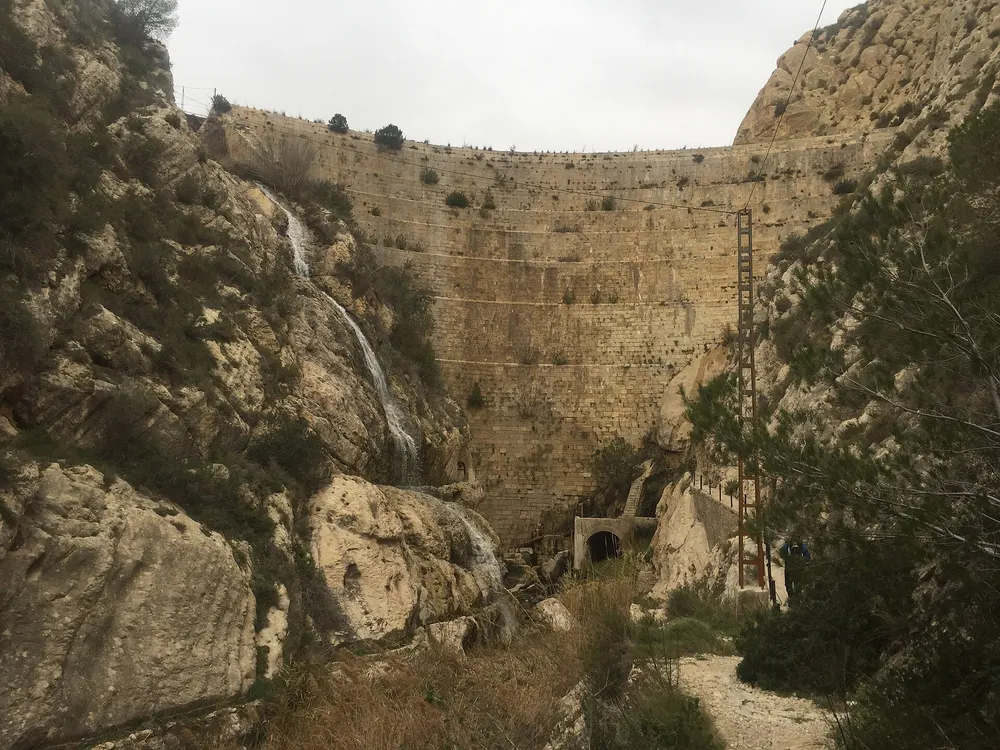
Arch dam of 1580 to 1594 on the Monnegre, 41 m high, among the oldest working dams in Europe. Signed path to the wall in a 10 m wide gorge.

The Embalse de Tibi holds one of the oldest working dams in Europe: an arch-gravity wall on the Monnegre river, between Tibi and Xixona, first stoned in 1580 and finished in 1594 to store water for the Alicante huerta. The gorge floor at the wall is barely 10 m wide, and the dam rises about 41 m, much thicker at the base than at the crest. After bursting in 1697 it stood broken for forty years until repairs of 1736 to 1738, and a new drainage tunnel was cut into the right bank in 1941. The council presents it as heritage, with a BIC monument listing, and the regional tourism board lists it for Alicante province.
What to see
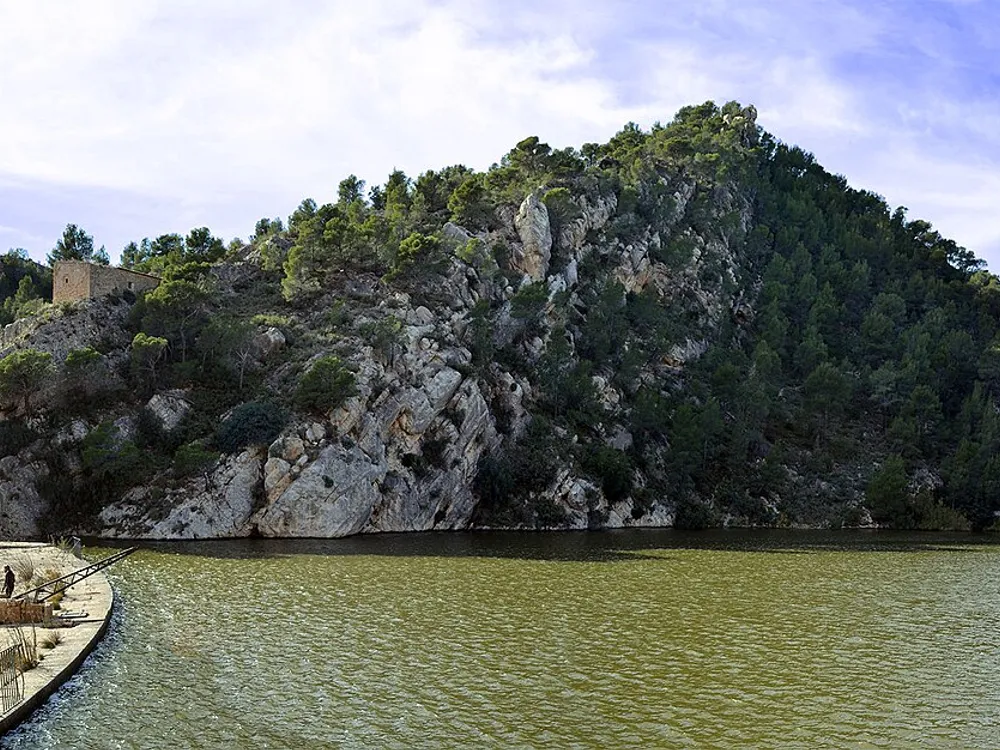
The visit centres on the dam wall itself: masonry core with lime mortar, ashlar faces, six downstream steps and a rock-cut stair with an iron rail. A keeper's house with a chapel stands on the hill, its portal dated 1795. The setting is a tight gorge, so the walk is short and the interest is historical and technical rather than sporting. It pairs well with another historic Alicante dam, the Relleu reservoir.
Getting there
Drive to Tibi, about 95 km from València; a car is needed, as no public transport reaches the dam track. Use the lay-bys on the access track and verify parking on site, since no signed lot is confirmed. A signed trail leads down to the dam wall.
Tips
- Go from autumn to spring; the gorge gives little shade in summer.
- There are no verified swimming rules for the reservoir; treat it as look-only.
- Respect the monument: do not climb the wall or enter galleries.
Frequently asked questions
How do you visit the Tibi dam?
Drive to Tibi and take the access track to the dam, then the signed trail down to the wall. No signed car park is confirmed, so verify parking on site.
Why is the dam famous?
It was first stoned in 1580 and finished in 1594, repaired in 1736 to 1738 after bursting in 1697. At about 41 m high in a 10 m wide gorge, it ranks among the oldest working dams in Europe.
When is the best time to go?
From autumn to spring, for mild walking weather. Summer brings harsh sun to the gorge.
Comments
Sign in with Google to comment and rate
What did you think? Be the first to share it.